
-
Disease Description (Causes and Symptoms)
- Definition: A chronic, recurrent inflammatory skin disease characterized by well-demarcated erythematous papules and plaques covered with silvery-white scales. Histologically, excessive proliferation of keratinocytes and epidermal thickening are observed.
- Causes and pathophysiology: Genetic predisposition + environmental triggers (skin trauma [Koebner phenomenon], infections—particularly streptococcal infections, cold and dry climates, medications, stress, etc.) stimulate the immune system (particularly T cells and the cytokine axis: TNF-α, IL-17, IL-23, etc.), causing keratinocyte hyperproliferation and inflammation.
- Main symptoms
- Silvery-white scales over well-demarcated erythematous plaques (plaque psoriasis)
- Pinpoint bleeding when scales are removed (Auspitz sign)
- Mainly affects the elbows, knees, shins (extensor surfaces of the limbs), scalp, and sacral area
- Hand and toenail lesions (approximately 30–50%): nail pitting, onycholysis, thickening, discoloration, etc.
- Variants: guttate psoriasis (small numbers of papules), pustular psoriasis, inverse psoriasis (skin folds), erythrodermic psoriasis (generalized), etc.
-
Treatment Methods (Standard Treatment·Medications·Procedures·Lifestyle Management·Precautions)
- Topical treatment (mainly for mild cases)
- Topical corticosteroids (short-term use recommended according to potency), vitamin D analogues (calcipotriol), moisturizers, salicylic acid (descaling)
- Mild formulations or nonsteroidal agents are recommended for the face and skin folds
- Precaution: Long-term use of high-potency steroids may cause side effects such as skin atrophy and telangiectasia
- Phototherapy
- Narrowband UVB (narrowband UVB): Can also be used in children and pregnant women and is currently widely used
- PUVA (psoralen + UVA): Effective, but use is limited because of oral medication side effects, photosensitivity, and the possibility of an increased long-term risk of skin cancer
- Excimer laser: Targeted high-intensity irradiation (used as an adjunctive treatment for small groups of lesions)
- Precaution: Excessive irradiation may cause burns; long-term skin cancer risk should be considered
- Systemic treatment (moderate to severe)
- Conventional medications: Methotrexate (hepatotoxicity; blood test monitoring required), Cyclosporine (effects on the kidneys and blood pressure), Acitretin (oral retinoid, teratogenic)
- Immunomodulator: Steroid (short-term use recommended)
- Targeted and biologic agents (severe/refractory cases)
- TNF-α inhibitors: etanercept, infliximab, adalimumab
- IL-12/23 inhibitor: ustekinumab
- IL-17 inhibitors: secukinumab, ixekizumab
- IL-23 inhibitors: guselkumab, risankizumab, etc.
- Oral small molecule: apremilast (PDE4 inhibitor)
- Precautions and monitoring: Test for tuberculosis and hepatitis B before administering biologic agents, regularly monitor for infections, confirm vaccination history, and select medications appropriately when planning pregnancy (e.g., acitretin is contraindicated during pregnancy)
- Lifestyle management and prevention
- Moisturize thoroughly and avoid physical damage such as skin friction and excessive scrubbing (to prevent the Koebner phenomenon)
- Manage infections (e.g., throat infections), manage stress, stop smoking and excessive alcohol consumption, and lose weight (obesity is an aggravating factor)
- Complications requiring attention
- Psoriatic arthritis (rheumatoid-like joint symptoms), increased risk of metabolic syndrome and cardiovascular disease, psychological effects (depression and reduced social functioning), treatment-related infections and medication side effects
- Topical treatment (mainly for mild cases)
-
Checklist Before an Outpatient Visit (Including Preparation Items, Points to Review, and Sample Questions)
- Items and records to prepare
- List of all medications and supplements currently being taken (including dosage and frequency)
- Records of previous dermatology prescriptions and treatments (topical medications, phototherapy, systemic treatment, biologic agents), including their effects and side effects
- Recent photographs (by lesion location), when symptoms began or worsened, and triggering circumstances (infection, trauma, medication, stress, seasonal changes)
- Underlying conditions (liver, kidney, and cardiovascular disease, history of infections), pregnancy status, or pregnancy plans
- Recent test results, if available (liver function, kidney function, CBC, viral tests, etc.)
- Information to tell the doctor in advance during the outpatient visit
- Any ointments or alternative therapies currently being used for self-treatment or without a prescription
- Vaccination history (especially whether any live vaccines have been used)
- Previous use of biologic agents and reasons for discontinuation
- Items and records to prepare
-
Examples of General Questions to Ask the Doctor
- What are the expected effects and side effects of this medication (or treatment)?
- What is the severity of my disease and its prognosis (impact on daily life)?
- I am planning a pregnancy or breastfeeding. Which treatments are safe?
- When will the treatment effect be evaluated, and what are the alternative options if it is ineffective?
- What tests and monitoring intervals are required when using systemic treatment or biologic agents?
-
Examples of Disease-Specific Questions
- I have hand and toenail lesions. What treatment is needed to prevent permanent damage (permanent deformity) caused by them?
- I also have joint pain (or morning stiffness). What tests should I undergo to determine whether I have psoriatic arthritis?
Psoriasis
Also known as: 건선 건선피부, 건선피부염
Add to My conditionsDermatology doctors
Doctors who treat Psoriasis
See all
Han Tae-yeong
Nowon Eulji University Hospital · Dermatology
아토피피부염, 건선, 원형탈모, 백반증

Yoon Mun-su
CHA Bundang Medical Center · Dermatology
백반증, 건선, 여드름, 피부미용

Park Eun-ju
Hallym University Sacred Heart Hospital · Dermatology
건선, 손발바닥농포증, 접촉피부염 및 피부 알레르기, 흉터, 레이저

Yoo Gwang-ho
Chung-Ang University Gwangmyeong Hospital · Dermatology
여드름, 원형탈모(모발클리닉), 건선, 흉터

Han Byeol
Eulji University Uijeongbu Hospital · Dermatology
아토피피부염, 탈모, 건선, 흉터, 여드름, [흉터클리닉], [레이저클리닉]

Noh Ju-yeong
Ewha Womans University Seoul Hospital · Dermatology
아토피피부염, 건선, 자가면역수포질환, 만성두드러기 ※수·금 15시 이후 : 레이저 및 시술
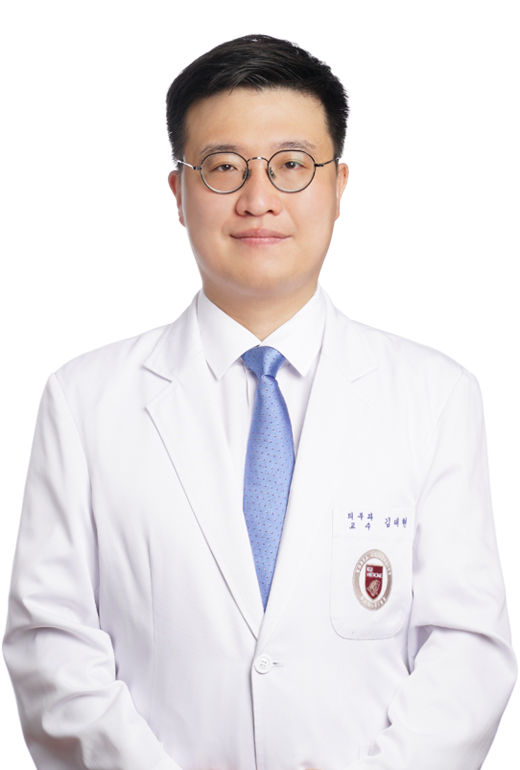
Kim Dae-hyeon
Korea University Anam Hospital · Dermatology
건선,아토피,일반피부과학,소양증,두드러기

Kim Gyeong-mun
St. Vincent's Hospital, Catholic University of Korea · Dermatology
피부암 및 피부외과, 레이저치료, 조갑질환, 여드름, 건선,아토피피부염, 알레르기 피부염

Lee Hui-jeong
CHA Bundang Medical Center · Dermatology
아토피, 여드름, 피부미용, 백반증, 두드러기, 화농성 한선염, 건선
Choi Jae-eun
Nowon Eulji University Hospital · Dermatology
피부, 손발톱, 아토피, 습진, 알레르기, 건선, 백반증
Patient stories: Psoriasis
Hospitals that treat Psoriasis
University hospitals where the doctors above see patients. Open a hospital to see its doctors by specialty and how to book.
Nowon Eulji University Hospital
Han Tae-yeong, Choi Jae-eun
CHA Bundang Medical Center
Yoon Mun-su, Lee Hui-jeong
St. Vincent's Hospital, Catholic University of Korea
Kim Gyeong-mun
Korea University Anam Hospital
Kim Dae-hyeon
Eulji University Uijeongbu Hospital
Han Byeol
Ewha Womans University Seoul Hospital
Noh Ju-yeong
Chung-Ang University Gwangmyeong Hospital
Yoo Gwang-ho
Hallym University Sacred Heart Hospital
Park Eun-ju
Other conditions in Dermatology
Condition guideReviewed by · GoodDoctorNet medical specialists
This information is for general understanding only and does not replace diagnosis, prescription or treatment for an individual patient. If you have symptoms, please see a doctor.
Our medical content policy (in Korean) →