
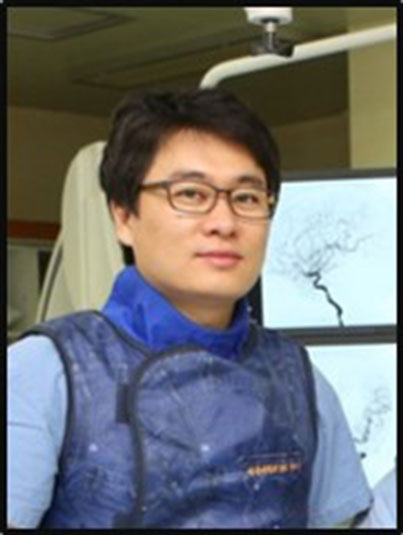
Jung Yeong-jin
Yeungnam University Hospital|Neurosurgery
Daegu Nam-gu
Last updated
Medical opinions · Patient reviews0
No reviews yet.
If you've been treated by Jung Yeong-jin, be the first to leave a review.
Planning to see Jung Yeong-jin?
Save this doctor and find them again anytime on My page.
Ask other patients
If reviews don't answer your questions, ask patients and caregivers who have been there.
Patient stories: Neurosurgery
MoreHospital information
- Hospitals
- Yeungnam University Hospital
- Specialties
- More Neurosurgery doctors
- Address
- 170 Hyeonchung-ro, Nam-gu, Daegu
- University
- 영남대학교 의과대학
- Appointments
- 053-620-4030Book by phone (053-620-4030)
Education and career
Career
- 영남대학교 신경외과 교수/ 의학석사
- 미국 에모리 대학 교환 교수 (Emory University Medical Center, Visiting scholarship, 2016.08~2017.07)
- 서울 아산 병원 신경외과 전임의
- 영남대학교 신경외과 전임의
Academic societies
- 1. Selective Coil Embolization of a Ruptured Fusiform Aneurysm Involving the Anterior Choroidal Artery and Posterior Communicating Artery. 2018
- 2. Feasibility and Midterm Outcomes of Endovascular Coil Embolization of an Unruptured Middle Cerebral Artery Aneurysm with an Incorporated Branch. 2018
- 3. Coil Embolization Results of the Ruptured Proximal Posteriori Inferior Cerebellar Artery Aneurysm: A Single-Center 10 Years’ Experience. 2018
- 4. Technical Consideration for Coiling of Ruptured Proximal Posterior Inferior Cerebellar Artery Aneurysm. 2018
- 5. Optic radiation injury in patients with aneurismal subarachnoid hemorrhage: a preliminary diffusion tensor imaging report. 2018
- 6. Restoration of the corticoreticular pathway following shunt operation for hydrocephalus in a stroke patient. 2018
- 7. Recovery of akinetic mutism and injured prefronto-caudate tract following shunt operation for hydrocephalus and rehabilitation. 2017
- 8. The Relationship Between the Direction of Putaminal Intracerebral Hemorrhage and Anterior Cerebral Artery Predominance. 2017
- 9. Delayed-Onset Central Pain due to Degeneration of Ischemic Transcallosal Fibers After Corpus Callosum Hemorrhage. 2017
- 10. Difference of recovery course of motor weakness according to state of corticospinal tract in putaminal hemorrhage. 2017
- 11. Simultaneous Onset of Ischemic and Hemorrhagic Stroke Due To Intracranial Artery Dissection. 2017
- 12. Simultaneous Onset of Ischemic and Hemorrhagic Stroke Due To Intracranial Artery Dissection. 2017
- 13. Fluoroscopy-guided Combined (Surgical/Endovascular) Treatment of Dural Arteriovenous Fistula. 2017
- 14. Locked-in Syndrome Due to Transtentorial Herniation and Kernohan Notch Phenomenon. 2017
- 15. Hypersomnia due to injury of the ventral ascending reticular activating system following cerebellar herniation. 2017
- 16. Severe ataxia due to injuries of neural tract detected by diffusion tensor tractography in a patient with pontine hemorrhage. 2016
- 17. Change of ascending reticular activating system with recovery from vegetative state to minimally conscious state in a stroke patient. 2016
- 18. Bilateral injury of the superior longitudinal fasciculus in a patient with Balint syndrome. 2016
- 19. Prediction of motor outcome by shoulder subluxation at early stage of stroke. 2016
- 20. Laparoscopic Treatment of Ventriculoperitoneal Shunt Complication Caused by Distal. 2016
- 21. Recovery process of corticospinal tract injured by intracerebral hemorrhage from onset to chronic stage. 2016
- 22. Difference of injury of the corticospinal tract according to surgical or conservative treatment in patients with putaminal hemorrhage. 2016
- 23. Changes of the corticospinal tract in the unaffected hemisphere in stroke patients: A diffusion tensor imaging study. 2016
- 24. Post-stroke hypersomnia. 2016
- 25. Recovery of Hypersomnia Concurrent With Recovery of an Injured . 2016Ascending Reticular Activating System in a Stroke Patient: A Case Report. 2016
- 26. Thalamic Reorganization in Chronic Patients With Intracerebral Hemorrhage: A Retrospective Cross-Sectional Study. 2015
- 27. Injury of the oculomotor nerve after aneurysmal subarachnoid hemorrhage: diffusion tensor tractography study. 2015
- 28. Superficial Temporal Artery Pseudoaneurysm Treated with Manual Compression Alone. 2015
- 29. Delayed Traumatic Diaphragm Hernia after Thoracolumbar Fracture in a Patient with Ankylosing Spondylitis. 2015
- 30. Injury of the corticoreticular pathway in subarachnoid haemorrhage after rupture of a cerebral artery aneurysm. 2015
- 31. Large Sized Common Iliac Artery Aneurysm with Thrombus Developing a Diagnostic Confusion in a Patient with Sciatica. 2014
- 32. Motor Recovery Via Transcallosal and Transpontine Fibers in a Patient with Intracerebral Hemorrhage. 2014
- 33. Injury of the mammillothalamic tract in patients with subarachnoid haemorrhage: a retrospective diffusion tensor imaging study. 2014
- 34. Characteristics of injury of the corticospinal tract and corticoreticular pathway in hemiparetic patients with putaminal hemorrhage. 2014
- 35. Endovascular Treatment of a Ruptured Posterior Inferior Cerebellar Artery Aneurysm during Pregnancy. 2014
- 36. Injury of the cingulum in patients with putaminal hemorrhage: a diffusion tensor tractography study. 2014
- 37. Endovascular coil embolization of unruptured intracranial aneurysms : a Korean multicenter study. 2014
- 38. Usefulness of Dexmedetomidine during Intracerebral Aneurysm Coiling. 2014
- 39. Effect of Discontinuation of Anticoagulation in Patients with Intracranial Hemorrhage at High Thromboembolic Risk. 2014
- 40. Prognostic Factors of Neurocognitive and Functional Outcomes in Junior and Senior Elderly Patients with Traumatic Brain Injury Undergoing Disability uation or Appointed Disability uation. 2014
- 41. Mortality and Real Cause of Death from the Nonlesional Intracerebral Hemorrhage. 2014
- 42. The Anatomy of the Superficial Temporal Artery in Adult Koreans Using 3-Dimensional Computed Tomographic Angiogram : Clinical Research. 2013
- 43. Inclidental Superior Hypophygeal Artery Aneurysm ded within Pituitary Adenoma. 2013
- 44. Clinical Outcome and Associated Factors of Spontaneous Intracerebral Hemorrhage : 1 Year Follow-up Result . 2013
- 45. Intraosseous Arteriovenous Malformation of the Sphenoid Bone Presenting with Orbital Symptoms Mimicking Cavernous Sinus Dural Arteriovenous Fistula : A case Report. 2013
- 46. Usefulness of Three Dimensional Proset MR Images for Diagnosis of Sympotomatic L5-S1 Foraminal and Extraforaminal Stenosis. 2013
- 47. The effects of hydrocephalus on the periventricular white matter in intracerebral hemorrhage: a diffuser tensor imaging study. 2013
- 48. Fusiform Aneurysm on the Basilar Artery Trunk Treated with Intra-Aneurysmal Embolization with Parent Vessel Occlusion after Complete Preoperative Occlusion Test. 2013
- 49. Recovery of an injured corticospinal tract during a critical period in a patient with intracerebral hemorrhage. 2013
- 50. Chondrosarcoma Apoplexy in Thoracic Spine. 2013
- 51. Diffusion tensor imaging findings of optic radiation in patients with putaminal hemorrhage. 2013
- 산업재산권 및 기술이전
- 국내 특허(발명)
- 혈관내 수술을 위한 세정라인 구분장치 2017-05-29
- 대한 신경외과 학회 정회원
- 대한 뇌혈관 외과 학회 정회원
- 대한 뇌혈관내 수술 학회 정회원 및 뇌혈관내 수술 인증의
- 대한 뇌졸중 학회 정회원
- 대한 두통학회 정회원
FAQ
- What conditions does Jung Yeong-jin treat?
- Jung Yeong-jin (Neurosurgery, Yeungnam University Hospital) treats conditions such as Cerebrovascular disorders (cerebral aneurysm, cerebral hemorrhage, cerebral infarction, moyamoya disease, cerebral arteriovenous malformation), Headache, Dizziness/Diplopia.
- Where does Jung Yeong-jin see patients?
- In Neurosurgery at Yeungnam University Hospital. The hospital address is 170 Hyeonchung-ro, Nam-gu, Daegu.
- What is Jung Yeong-jin's specialty?
- Specialty: Neurosurgery.
Is any information wrong?
Let us know about changes to hospital, specialty, career and so on, and we'll update it after checking.